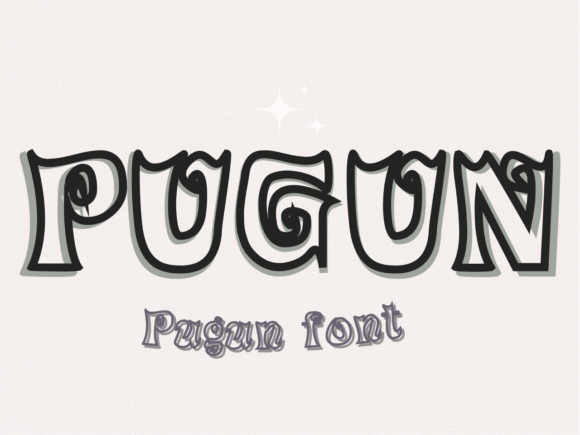
Pugun: Injecting Whimsy and Personality into Your Next Project
There is a distinct moment in every design project where you realize the standard, safe typography just isn't cutting it. You have the layout, the color palette, and the imagery, but the text feels flat, lacking the energy needed to make the audience stop scrolling. This is where a display font steps in to steal the show, and finding one that strikes the perfect balance between legibility and character can transform a mundane layout into something memorable. If you are tired of blending in with the crowd and want to inject a sense of fun and quirkiness into your work, it might be time to look beyond the standard sans serif and embrace a typeface with a bit more attitude.
Understanding the Visual Appeal of Quirky Typography
Pugun is a fun and quirky display font designed to break the monotony of corporate rigidity. Unlike the stiff neutrality of a traditional sans serif font, a typeface like Pugun brings a hand-crafted, organic feel to digital and print media. Its visual appeal lies in its distinct personality—it doesn't try to be invisible. Instead, it invites the viewer in with playful curves and bold presence. For designers and brand strategists, this is a powerful asset. We often get caught up in the "rules" of modern typography, forgetting that design is ultimately about communication. Sometimes, the most effective way to communicate is to show that your brand doesn't take itself too seriously.
When you add a creative font like this to your toolkit, you are essentially adding a voice to your visual hierarchy. Think about the difference between a generic instruction manual and a friendly note left on a refrigerator. The latter has warmth and personality. Pugun functions as that friendly note. It is particularly effective for projects targeting a younger demographic or industries that thrive on creativity, such as lifestyle blogging, artisanal goods, or children's education. It moves away from the cold efficiency of geometric shapes and embraces a more human, approachable aesthetic.
Practical Applications: Where Quirkiness Shines
Knowing when to deploy a display font is just as important as choosing the right one. You wouldn't set the body text of a legal contract in Pugun, but for headlines, logos, and packaging, it is a game-changer. Here are some specific scenarios where this type of typography adds significant value:
- Brand Identity and Logo Design: If you are building a brand identity for a coffee shop, a boutique clothing line, or a creative agency, Pugun can serve as the anchor for your visual identity. It helps in creating a logo that is instantly recognizable and conveys a welcoming vibe. A quirky serif or display font suggests that the business is accessible and creative, setting the tone before a customer even reads the "About" page.
- Packaging Design: On the shelves, packaging design is a battle for attention. A bold, fun font helps products stand out. Imagine a line of organic snacks or craft beers; the typography needs to reflect the artisanal nature of the product. Pugun provides that hand-made feel that suggests care and quality, distinguishing the product from mass-produced competitors.
- Social Media Graphics: In the fast-paced world of social media graphics, engagement is everything. A striking headline font can stop a user mid-scroll. Whether it is for an Instagram story, a Facebook banner, or a Pinterest pin, using a distinct typeface ensures your content is not just seen, but remembered. It adds a layer of professionalism to your digital marketing assets that standard system fonts simply cannot provide.
- Merchandise and Invitations: For t-shirts, tote bags, or wedding invitations, the font often is the design. A quirky display font allows for expressive typography that feels personal and artistic. It turns text into a graphic element in its own right, perfect for editorial layouts or posters where the message needs to be loud and clear.
Bridging the Gap: Readability and Professionalism
One of the biggest concerns when using a "fun" font is maintaining readability and professional presentation. There is a fine line between "quirky" and "unreadable." However, a well-designed display font understands this tension. While Pugun is undoubtedly playful, it retains the structural integrity needed for legibility. The key is in the application. As a rule of thumb for typography pairing, if your headline is loud and distinct, your body copy should be quiet and neutral.
For example, you might pair Pugun with a clean, geometric sans serif font for your subheadings and body text. This contrast creates a dynamic visual hierarchy. The display font grabs attention and establishes the mood, while the sans serif provides a comfortable reading experience for longer blocks of text. This pairing strategy is essential for web design and blog layouts, where users are scanning for information. By using Pugun for H1s and H2s, you guide the reader's eye down the page without overwhelming them.
Furthermore, visual consistency is crucial for brand recognition. Once you choose a font style that represents your brand's voice, stick to it. Using Pugun across your headers, social posts, and print materials creates a cohesive ecosystem. This consistency builds trust with your audience; they begin to associate that specific typographic style with your content, making your brand instantly identifiable even in a crowded feed.
Integrating Pugun into Your Workflow
Adopting a new typeface involves more than just a download; it requires a shift in how you approach your design assets. Before committing to Pugun for a large-scale rebrand, take the time to test it in different contexts. Create a mood board that includes the font alongside your proposed color palette and imagery. Does it clash with your photography style, or does it enhance it? Does it look as good on a mobile screen as it does on a printed poster?
It is also worth reviewing the full character set of the font. Premium fonts often include stylistic alternates, ligatures, and extended language support. These features allow you to customize the look of the text, ensuring that your typography feels unique to your specific project rather than a generic template. Experiment with these extras to see if they offer a solution to a specific design problem you are facing.
Finally, always consider the commercial licensing. If you are using the font for a client project, a business logo, or merchandise for sale, you need to ensure you have the correct license. This is a fundamental part of professional design work. Respecting font licensing protects you legally and supports the typographers who create these design assets, allowing them to continue producing high-quality work.
Finding the Right Voice for Your Project
Choosing the right typography is an exercise in empathy. You have to step into the shoes of your audience and ask yourself how they want to feel when they see your content. If the goal is to convey authority and seriousness, a classic serif font might be the answer. But if the goal is to spark joy, curiosity, or creativity, a font like Pugun is the ideal choice. It is a tool that allows small business owners, content creators, and hobbyists to express their unique voice without needing a massive design budget.
In a digital landscape saturated with identical minimalist templates, a bit of quirkiness is a breath of fresh air. It signals that there is a real human behind the design—someone who values personality and fun. By carefully integrating a display font into your workflow, balancing it with solid design principles, and applying it to the right materials, you can elevate your projects from standard to standout. So, go ahead and experiment; you might be surprised at how much a single font can change the entire perception of your brand.