Fractal: The Bold Display Font That Makes Your Work Stand Out
Every creative project needs a voice. Whether you're designing a logo for a new startup, crafting social media posts that stop the scroll, or laying out a magazine spread, the typography you choose does more than just display words—it sets the entire mood. Some fonts whisper. Others shout. And then there are typefaces like Fractal, a premium display font that commands attention without saying a single word.
Fractal isn't trying to be everything to everyone. It's a display typeface, which means it's built for headlines, logos, and moments where you need visual impact. Think of it as the difference between a casual conversation and a keynote speech. You wouldn't use a display font for body text in a novel, but when you need a title to pop off a poster or a brand name to feel instantly memorable, that's exactly where Fractal shines.
What Makes a Display Font Worth Your Attention
Not all typefaces are created equal, and display fonts occupy a specific niche in the design world. They're the showstoppers—the ones you reach for when a project needs personality, energy, or a distinct point of view. A good display font carries its own character, which means it can do a lot of the heavy lifting in your designs without requiring extra graphics or embellishments.
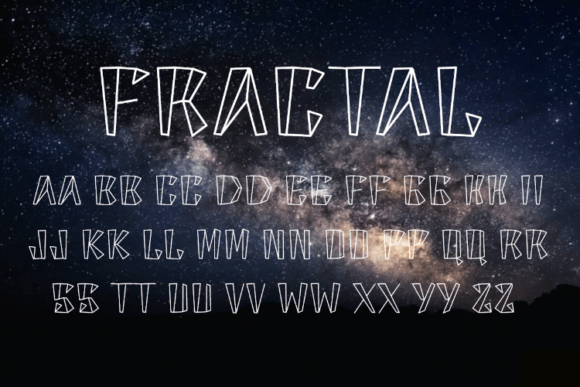
Fractal fits squarely into this category. Its letterforms have a modern edge that feels contemporary without being trendy in a way that'll date your work next year. The proportions are carefully balanced, giving each character enough breathing room to read clearly at larger sizes while still maintaining a cohesive rhythm when set as a word or phrase. This balance matters more than people realize. A display font that's too cramped looks messy. One that's too loose feels disconnected. Fractal threads that needle well.
Bringing Your Brand Identity Into Focus
If you're building a brand from scratch—or refreshing one that's lost its spark—typography is one of the first decisions that shapes everything else. Your font choice influences your color palette, your layout style, even the tone of your copywriting. It's foundational.
For small business owners and entrepreneurs, Fractal offers something practical: a typeface with enough personality to differentiate your brand without alienating potential customers. A boutique coffee roaster could use it to project artisanal confidence. A tech startup might lean into its clean geometry for a forward-thinking vibe. A fitness brand could harness its boldness to communicate strength and motivation. The font adapts to context because its design is versatile enough to carry different meanings depending on what surrounds it.
This kind of flexibility is exactly what you want in a commercial font. You're investing in a design asset that should work across multiple touchpoints—your website header, your packaging, your Instagram stories, your business cards—without feeling repetitive or out of place.
Practical Applications Across Every Medium
Let's talk specifics. Where does a font like Fractal actually earn its keep?
Logo design is the obvious starting point. A strong wordmark logo relies entirely on typography to communicate brand values. Fractal's distinctive letterforms give you a foundation that can stand alone or work alongside an icon. Because display fonts carry inherent style, they reduce the need for excessive design elements. Sometimes a well-chosen typeface is the logo.
Packaging design is another arena where display fonts prove their worth. Walk down any grocery aisle and you'll notice that the products catching your eye are the ones with bold, readable typography on the shelf. Fractal works beautifully for product names, taglines, and front-of-package messaging where instant recognition matters.
For social media graphics, the stakes are different but equally high. You have roughly two seconds to capture someone's attention as they scroll. A striking headline set in a display typeface can be the difference between engagement and invisibility. Fractal's visual weight makes it ideal for quote graphics, announcement posts, sale promotions, and story overlays where text needs to read clearly against photographic backgrounds.
Editorial design and print materials benefit from display fonts in more subtle ways. Magazine covers, book titles, event posters, and flyers all rely on a strong typographic hierarchy. Fractal can anchor the top of that hierarchy while you pair it with a more neutral serif or sans serif font for supporting text.
Don't overlook merchandise and invitations either. T-shirt designs, tote bags, wedding invitations, event announcements—these are all projects where a unique typeface adds perceived value and craftsmanship. People notice when something looks custom-designed, even if they can't articulate why.
Pairing Fractal With Other Typefaces
Here's where practical design knowledge comes in. Display fonts rarely work in isolation. You'll almost always need a secondary typeface for body copy, captions, or supporting information. The key to a successful font pairing is contrast.
If Fractal is doing the heavy lifting as your headline font, pair it with something quieter for longer text. A clean sans serif like a geometric or neo-grotesque style works well for digital projects—think website body copy or social media descriptions. For print-heavy projects like editorial layouts or packaging with ingredient lists, a classic serif font provides readability at smaller sizes while complementing Fractal's modern aesthetic.
Avoid pairing two display fonts together. The result is almost always visual noise. Instead, let Fractal be the star and give it a supporting cast that stays in the background. This approach creates clear typographic hierarchy, which is the backbone of professional-looking design.
Test your pairings in context. Set a mock headline in Fractal and place your body text beneath it. Zoom out. Does the contrast feel intentional? Does each font occupy its own space without competing? Good pairings feel effortless, but they're always deliberate.
Readability Is Non-Negotiable
One common pitfall with display fonts is sacrificing readability for style. A typeface might look gorgeous in a specimen sheet but fall apart when applied to real content. Before committing Fractal to any project, test it with your actual words—not just "The quick brown fox."
Set your brand name. Set a headline you'd actually use. Check the letter spacing at the size you'll be working with. Display fonts often benefit from slight tracking adjustments depending on the medium. A poster headline set at 72 points has different spacing needs than a logo rendered at 24 points.
Consider your audience's viewing conditions too. Will they see this on a phone screen? A printed brochure held at arm's length? A billboard from across a parking lot? Each scenario demands different legibility standards. Fractal's clean construction helps maintain clarity across these variations, but it's always worth doing a real-world test before finalizing.
Licensing and Long-Term Value
When you invest in a premium font, understanding the licensing terms protects both you and the font creator. Most commercial fonts come with specific usage rights—desktop licenses for print work, web font files for online use, and sometimes separate licenses for merchandise or app embedding. Read the fine print before purchasing, especially if you plan to use the font across multiple projects or for client work.
A quality typeface is a long-term asset. Trends come and go, but a well-designed font with strong fundamentals stays useful for years. Fractal's modern typography sensibility gives it enough contemporary appeal to feel current while avoiding the hyper-specific styling that makes some display fonts feel dated within a season.
For designers building a font library, having a reliable display typeface on hand saves time on future projects. Instead of searching for the right headline font every time you start something new, you already have a proven option ready to go. That efficiency compounds over dozens of projects.
Making Typography Work Harder for You
The best design choices are the ones that work quietly in the background, doing their job without drawing attention to themselves. Paradoxically, a display font like Fractal does draw attention—that's its purpose—but it should feel like a natural extension of your project's personality rather than a decoration bolted on top.
Use it intentionally. Reserve it for the moments that matter most in your layout. Let it establish tone and energy while your supporting typography handles the informational load. Test it across your actual deliverables before committing to a full brand rollout. And pair it thoughtfully with typefaces that complement rather than compete.
Good typography doesn't just make things look better. It makes communication clearer, brands more recognizable, and creative work more professional. That's the real value of a font like Fractal—not just what it looks like, but what it helps you accomplish.